

Introduction
Picture a man who stands 200 centimetres tall, rises above a volleyball net, and leaves two Olympic Games with a silver medal and a gold one. the flying elephant memoirs of an olympic champion kindle edition alexander savin Now give his memoir a title that sounds like a circus act. That’s The Flying Elephant: Memoirs of an Olympic Champion by Alexander Savin, and honestly, who wouldn’t click on that?
Savin played for the Soviet Union. He took silver at Montreal in 1976 and gold at Moscow in 1980. Those results are on the record, so there’s no guesswork involved.
The book is a slightly different story. An English Kindle edition exists, but the details floating around online don’t all come from equally solid ground. So I’ll sort what’s confirmed from what’s merely “reported,” and I’ll tell you which is which.
Grab a coffee. Let’s figure out whether this one belongs on your reading list.
What Is “The Flying Elephant: Memoirs of an Olympic Champion”?

It’s a sports memoir tied to Alexander Savin’s life as a volleyball player and Olympic champion. A memoir isn’t a record book. A stats page tells you the final score, while a memoir tries to tell you what it felt like to be standing there when it happened.
Descriptions of the book connect it to Savin’s sporting life, his Olympic experiences, and the people around him, like teammates and coaches. Reports about the English translation say the project aimed to preserve those memories for readers outside the Russian-speaking world.
I haven’t read the full text, so I won’t pretend to summarize chapters or retell anecdotes. You’d spot that kind of bluffing a mile away, and you deserve better.
The Book at a Glance
Here’s the quick version of what’s been reported about the English edition:
| Detail | Reported information |
| Full title | The Flying Elephant: Memoirs of an Olympic Champion |
| Author | Alexander Savin |
| Main subject | Volleyball and Olympic sports history |
| Format | English-language Kindle edition |
| Publication date | October 26, 2025 |
| Print length | 514 pages |
| Photographs | More than 240 |
| Amazon identifier | B0FXVDWW16 |
Notice how often the word “reported” shows up. That’s deliberate. These specs come from online pages connected to the book, not from me holding the file in my hands.
Why the “Reported” Details Matter
Think of a used-car listing. The seller says low mileage, one owner, never been in an accident. Sounds great, but you’d still pop the hood before handing over cash.
Book listings work the same way. A few things are worth confirming before you buy:
- Page count: 514 pages is a big commitment, so check it against the live listing.
- Photo count: “More than 240” sounds exciting. But a number says nothing about how good the images are or where they came from.
- Publication date: Kindle metadata can differ between regions and versions.
- Price and availability: Both change, and they vary by marketplace.
Here’s the good news. Savin’s medals and championship record are well documented by independent sources, so the person behind the book is real and verifiable. It’s only the fine print of this particular edition that needs a second look.
The fix takes about two minutes. Search the title and author on Amazon, compare what the page shows with the table above, and open the preview if there is one.
Who Is Alexander Savin?
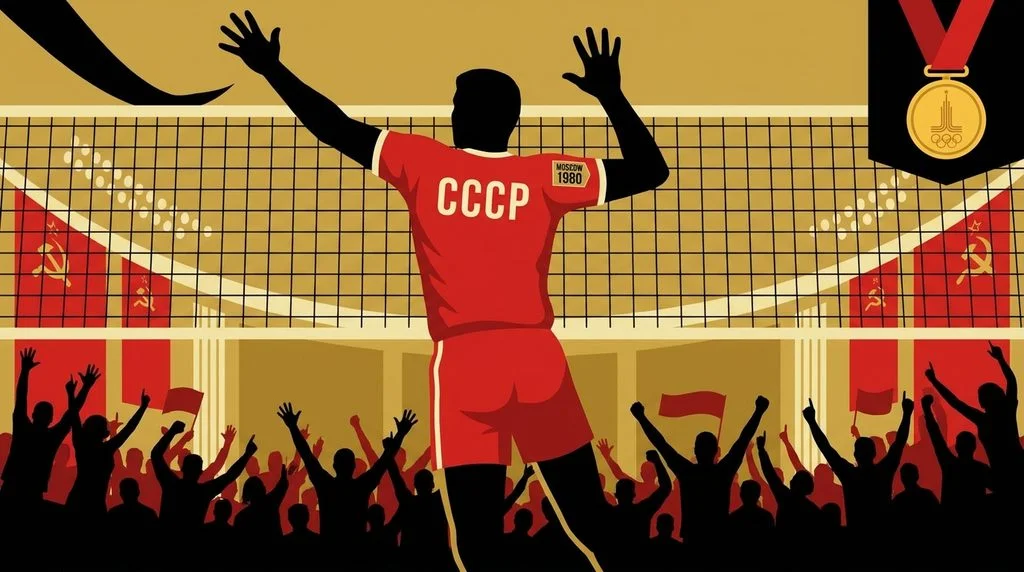
Aleksandr Borisovich Savin (Alexander Savin in English) was born on July 1, 1957, in Taganrog, a city in Russia’s Rostov region. He stood 200 centimetres tall, which is a handy thing to be when your job is hitting a ball over a net.
He competed for the Soviet Union during a stacked era for its men’s volleyball team. And he did it for a long time, across Olympic Games, World Championships, and European Championships.
Early Life and CSKA Moscow
Here’s what the records give us. Savin was born in Taganrog, and Olympedia ties him to CSKA Moscow, the famous army sports club.
That’s about where the verified childhood story ends. I haven’t found reliable details about his school days, his first training sessions, or what his family thought of all that jumping. The memoir may cover it, but I won’t guess on its behalf.
Why People Called Him “The Flying Elephant”
Good question. I wish I had a tidy answer.
The title obviously hints at something big that gets airborne. It’s tempting to connect that to a 200 cm spiker, but that’s my guess, not a documented fact. I couldn’t find a trustworthy source explaining where the name comes from, or even confirming it was a nickname people used.
Be careful here. Search the phrase and you’ll find pages telling wild stories about Savin: gymnastics, aerial sports, even Tokyo 2020. They contradict each other, and none of them match his documented career as a Soviet volleyball player. The honest answer is that the name’s origin is unverified, so check the book itself.
Savin’s Olympic Journey: Silver in 1976, Gold in 1980
Savin’s Olympic story has two chapters, and they feel like opposites. One ends in a loss, the other in a win. Together they make the shape of the whole career.
Montreal 1976: The Silver Medal
At the 1976 Games in Montreal, the Soviet Union reached the men’s final after beating Cuba in the semifinals. Then came Poland, who won the final in five sets.
Silver sounds nice on paper. But anyone who’s lost a final knows how it actually lands. You were one step from the top, and that’s the step you missed.
The International Volleyball Hall of Fame names Yuri Tchesnokov as the Soviet coach in Montreal. Savin was part of that team, and the Hall’s records and Olympedia both confirm the result.
Moscow 1980: The Gold Medal
Four years later, the Olympics came to Moscow. The Soviet team won the men’s volleyball tournament, beating Bulgaria 3–1 in the gold-medal match.
According to the Hall of Fame’s biography, Savin played in all six of the team’s matches. It was his second Olympic medal and his first gold.
Think of it like failing your driving test and passing it the following year, with the whole family cheering from the curb. Same car, same road, very different feeling. Savin got his second shot on home soil.
I’m not going to tell you what he felt that day. That’s what a memoir is for.
More Than the Olympics: Savin’s Championship Record
If you only know the Olympic medals, you’re missing most of the picture. Savin kept winning at other major tournaments, and for years.
World and European Championship Titles
Here’s what Olympedia records:
| Competition | Years and results |
| Olympic Games | Silver in 1976; gold in 1980 |
| World Championships | Gold in 1978 and 1982; silver in 1986 |
| European Championships | Gold in 1975, 1977, 1979, 1981, 1983, and 1985 |
That’s six European titles across ten years. Add two World Championship golds, and you can see why people still talk about that Soviet squad.
Savin’s career didn’t hang on one lucky tournament. He kept turning up and winning for more than a decade.
The 2010 Volleyball Hall of Fame Induction
In 2010, the International Volleyball Hall of Fame inducted Savin. The Hall is in Holyoke, Massachusetts, the town where volleyball was invented.
It’s an independent, public recognition of his career. So the man behind The Flying Elephant has a documented place in the sport’s history, whatever you decide about the book.
What the Memoir Covers (and What We Can’t Confirm)
Let’s be upfront about this part. I haven’t read the whole book, so I can only tell you what’s been publicly reported about it. That’s less than you might want, but it’s honest.
A First-Person View, Not a Record Book
A memoir is one person’s version of events. Olympedia can tell you the score of the 1980 final. It can’t tell you what the warm-up felt like or what a coach said in the hallway.
That’s the pitch of The Flying Elephant: Savin’s own voice on his sporting life and Olympic experiences. It’s also the catch. A memoir shows you one person’s memory, and memory isn’t always perfect.
The Teammates and Coaches Around Him
Volleyball is a team sport, and nobody wins gold alone. The Hall of Fame names Yuri Tchesnokov as the Soviet coach in Montreal in 1976. It also highlights the on-court connection between Savin and setter Vyacheslav Zaytsev.
Reports about the English translation say the book aims to preserve memories of the people around Savin, including teammates and coaches. That could make it a nice read for anyone curious about the humans behind the medals.
A Note on Honesty
Here’s what I can’t tell you. I can’t say which stories are in the book, how many chapters it has, or whether it contains any big revelations. Any site claiming to know all of that without quoting the text is probably guessing.
So if a page promises “shocking secrets” from the memoir, be skeptical. The preview is a better guide than any summary, mine included.
Soviet-Era Volleyball: The World Behind the Book
Savin’s career didn’t happen in a vacuum. It happened inside a very particular sporting system.
How the System Worked
During Savin’s career, the Soviet Union was a major power in international volleyball. Its national teams won Olympic and world-level titles, and the country’s sporting institutions backed athletes competing at the top.
Things like training structures, national-team selection, international travel, and what it meant to represent your country all worked differently from today’s pro sports. Savin’s own club, CSKA Moscow, was part of that machinery.
Why This Context Matters for Readers
When you read a memoir, background helps. Knowing the system gives you a map, so the stories land in the right place.
One warning, though. General facts about Soviet sport can’t tell you what Savin personally thought or felt. Only his own words, or reliable accounts, can do that.
My suggestion: read the memoir next to the official record. The results give you dates and scores. The book, if it delivers, gives you the human side.
The English Kindle Edition
Savin’s book was written for a Russian-speaking audience, and an English version has been reported. Here’s what we know, with the usual “reported” caution.
Translation and Contributors
Accounts of the translation project name Andrei Savine and Alfredo Cabero, along with other collaborators, as participants in preparing the English edition. I can’t judge the quality of the translation from outside. Sample pages will tell you more than any review.
Reported Specs
These details come from online pages associated with the book:
- Publication date: October 26, 2025
- Print length: 514 pages
- Photographs: More than 240
- Format: English-language Kindle edition
If those numbers are right, it’s a long book with plenty of pictures. But please confirm them yourself on the live listing, because Kindle details can change by region and version.
The Amazon Identifier
The reported identifier is B0FXVDWW16. Paste it into the Amazon search bar and see what comes up. If the title, author, and language match, you’re probably in the right place.
Who Should Read This Book?
The Flying Elephant might suit you if you’re any of these:
- A volleyball fan: You’re curious about the Soviet men’s team and the stars of that era.
- An Olympic history buff: Silver in 1976 and gold in 1980 make a documented, two-Games storyline.
- An athlete or coach: A first-person account of elite competition can be interesting. Just remember it’s one person’s story, not a training manual.
- A sports-history researcher: The memoir could work as a personal source. Compare it with official records and other reliable material.
- A reader of translated memoirs: If you don’t read Russian, the English edition gives you access to Savin’s story.
Not sure which one you are? The preview will help you decide.
Quick Checklist Before You Buy the Kindle Edition
Two minutes now can save you some regret later:
- Confirm the book. The title should be The Flying Elephant: Memoirs of an Olympic Champion, and the author should be Alexander Savin.
- Check the language. Make sure the listing is for the English edition.
- Review the edition details. Look at the publication date, page length, and listed contributors, and compare them with the table earlier in this article.
- Open the preview. Read a few pages and judge the writing, the translation, and the layout.
- Verify the photo claims. If the pictures matter to you, check what the listing says and look at any sample pages.
- Check price and availability. Both can differ by marketplace and change over time.
One more tip: don’t trust third-party sites that just repeat the same specs. The live retailer page is the stronger source.
Final Thoughts
Some things about Alexander Savin are settled. He won Olympic silver in 1976 and gold in 1980, took two World Championship golds and six European titles, and went into the International Volleyball Hall of Fame in 2010.
What’s less settled is the book. It’s reported to exist in English on Kindle, but I can’t vouch for every detail you’ll read about it online.
So here’s my honest take. If Soviet-era volleyball or Olympic stories interest you, the preview is a low-risk way to find out whether the writing suits you. If it clicks, you’ve got a long read about a champion whose record already speaks for itself.
FAQs
Who wrote The Flying Elephant: Memoirs of an Olympic Champion?
The book is attributed to Alexander Savin, the former Soviet volleyball player and Olympic champion. The English edition involves a translation and editing team, including contributors such as Andrei Savine and Alfredo Cabero.
What sport did Alexander Savin play?
He played volleyball. He represented the Soviet Union in men’s volleyball at the 1976 and 1980 Summer Olympics.
Which Olympic medals did Savin win?
He won silver at Montreal in 1976 and gold at Moscow in 1980. Olympedia records one silver and one gold for him.
Is the book available in English on Kindle?
Publication information and accounts from the translation project report an English Kindle edition. Check the Amazon listing in your region to confirm that it’s available.
How do I find the right edition?
Search the full title and Alexander Savin’s name. Then compare the language, format, publication details, and the reported identifier, B0FXVDWW16, with what the retailer page shows.
